In an era of environmentally sustainable practices, industrial solar panel installation emerges as a cornerstone in transitioning towards renewable energy.
The solar market demonstrated significant growth in 2023, showcasing a remarkable increase of 43% in installed photovoltaic energy systems compared to the previous year. Notably, the number of countries with a minimum of 1 GW (Gigawatt) installations surged from 17 in 2021 to 26 in 2022. Projections indicate that this number is poised to surpass 50 countries by 2025, signalling a substantial global expansion in solar energy adoption.
Should you consider gearing your business towards renewable solar energy, this comprehensive guide will answer the intricacies of industrial solar panels. We will explore their types, applications, benefits, installation process, costs, maintenance, key considerations, and emerging trends.
What is an industrial solar panel?
An industrial solar photovoltaic system, generates over 100 kW of power. The “kilowatt peak” (kWp) represents the system’s total kW (kilowatt) rating, indicating the theoretical maximum output capability of the system.
Difference between industrial and residential solar panels
Following characteristics differentiate industrial vs residential solar panel installation:
- Efficiency and power output:
Industrial solar power exhibits a 2% higher efficiency than residential solar power. - Size differences:
Industrial solar panels are larger (96 cells) than residential ones (72 cells). - Installation process:
Industrial solar panel systems are installed using a bolted racking system. - Industrial installations take up to a month, whereas residential panel installation generally concludes within one or two days.
- Colour variation:
Industrial solar panel systems are typically white, while residential systems come in black or white.

What is the wattage of industrial solar panels?
Industrial solar panels commonly comprise 72 solar cells and boast dimensions of up to 6 feet that generate power outputs between 350 and 400 watts.
However, it is of utmost importance to consider these six essential factors or solar panel installation for industrial complexes that can contribute to fluctuations in the generated power output.
- System size:
Larger solar systems are essential for powering commercial operations and reducing grid electricity reliance, with the needed size determined by roof space availability and expert consultation. - Panel count:
Choosing more efficient solar panels can maintain or increase electricity output, potentially requiring fewer panels. Additionally, consulting with a solar panel installation company and considering factors like roof size, budget, and energy needs is crucial for making informed decisions. - Positioning:
Solar panel efficiency depends on their positioning and exposure to solar radiation, with optimal placement at a 35-degree angle facing south maximising efficiency. In contrast, alternative angles may still generate electricity but at reduced efficiency. - Daylight hours:
Solar panels depend on sunlight for electricity generation, with the number of daylight hours directly influencing energy production. At the same time, seasons and weather conditions, especially cloudy days, can substantially impact electricity generation, leading to varying production levels. - Panel ratings:
Solar panels have power ratings measured in watts, indicating their size and efficiency, with higher ratings producing more electricity. - Maintenance:
Regular solar panel maintenance ensures optimal performance, highlighting the significance of consistent upkeep for maximum efficiency. Some solar panel installation services also provide maintenance services to enhance panel longevity and efficiency.
Which type of solar panel is best for industrial use?
There are three types of commercial solar panels. Below are the pros and cons of each type.
- Monocrystalline Solar Panels: These panels, known for their advanced technology, are made from pure cylindrical silicon ingots, allowing for superior efficiency and space efficiency with extended lifespans.While they excel in high-temperature environments, their higher cost and susceptibility to circuit breakdown when covered by dirt or shade are notable disadvantages.
- Polycrystalline Solar Panels: Known for their cost-effectiveness, these panels are created through a simpler manufacturing process using multiple silicon fragments. While they have lower efficiency and heat tolerance, they are advantageous in reducing manufacturing silicon wastage.
However, their lower efficiency and space inefficiency are notable drawbacks.
Read: Monocrystalline vs polycrystalline solar panels - Thin-Film Solar Panels:These are amorphous silicon cells, characterised by their quick and cost-effective manufacturing, offer advantages such as superior heat tolerance and durability, making them suitable for tropical climates. However, they have a shorter lifespan, ranging from 10 to 20 years, and lower efficiency than crystalline cells.Despite these drawbacks, their quick payback period, lower cost, and ease of installation contribute to their cost-effectiveness.
Read: Thin film photovoltaic cells (TFPV)
Some of the best commercial solar companies in the US are :
- SunPower: Best High-Efficiency System
- ADT Solar: Best Solar Warranty
- Green Home Systems: Best Solar Roofs
- Tesla: Best Solar Tech
- Freedom Solar: Best Regional Off-Grid Installer
Industrial applications of solar energy
Depending on technology, solar-thermal power systems can produce heat across a broad spectrum of temperatures, from below 400°C to beyond 1000°C.
Concentrating solar-thermal power (CSP) utilises mirrors to focus sunlight onto a receiver, generating high temperatures.
In industrial settings, this concentrated sunlight heats a fluid, known as industrial heat, used to store or provide heat for industrial purposes.
In manufacturing plants, solar power systems produce industrial heat crucial for converting materials into valuable products.
Industrial solar panels also create renewable energy solutions for various industries and processes, encompassing pasteurisation, blanching, distillation, and cleaning in the food and beverage sector.
Additionally, they serve the textile and garment industry with dyeing, drying, and washing needs while supporting the pharmaceutical sector in sterilisation, injection moulding, and distillation.
Moreover, industrial solar panels cater to the paper and pulp industry, aiding in bleaching, cooking, and drying processes.
Benefits of large-scale industrial solar panel installation
Now that you have probably made a general mental calculation of the size and type of solar panel needed, the next question would be, “How do the initial high installation expenses of solar panels align with their long-term benefits?”
Below are the long-term benefits :
- Economical and cost-effective:
Industrial solar systems provide high tariff rates, reducing costs and offering potential tax relief, countering rising energy expenses that usually makeup 15% of total operational costs. Despite higher initial investments, well-installed panels eventually cover their costs with minimal maintenance expenses, leading to significant long-term savings. - Protection against rising energy costs:
While energy bills have increased by over 16% in the past decade, solar energy presents a stable cost with a lifespan of 25 to 30 years. This enables cost predictions, eliminating unexpected bill fluctuations and offering assurance amidst inflation-driven expenses. - Environment-friendly solution:
Solar energy promotes clean and sustainable practices, significantly contributing to environmental preservation. - Energy selling option:
Installing solar systems provides two corporate models: power purchase agreements and capital expenditure agreements. These agreements allow industries to sell excess energy to local suppliers, providing an additional income stream. - Government support:
Local governments offer various incentives to encourage industrial solar panel adoption, including tax credits and subsidies. - Storage option:
Using energy storage systems alongside solar panels enables the collection and storage of excess energy, ensuring uninterrupted power supply and productivity. - Low maintenance cost:
Solar panels require primarily periodic cleaning and inverter replacement every 5 to 10 years. Their longevity and efficiency lead to lower repair and maintenance costs over time. - Branding and marketing:
Industries embracing green practices through solar energy can position themselves as environmentally conscious organisations. This can help in appealing to an audience inclined towards sustainability and fostering a positive brand image.
Process of solar panel installation for industrial complexes
While it might seem unfamiliar and time-consuming, meticulously following this process guarantees satisfying outcomes in expenses and future power returns.
Planning and preparation
- Engage a qualified solar provider:
Contact a reputable industrial solar panel installation company or Energy Service Company (ESCO) with a proven installation record and educate yourself about solar benefits and pricing estimations.
Selecting the right solar panels
- Discussion on energy use and incentives:
Meet a representative to assess your facility’s energy needs, and review utility billing history. Analyse energy usage patterns, and discuss potential financial incentives such as tax credits and, ultimately, the cost of installation of solar panels in industrial facilities. - Comprehensive consultation:
Engage with an audit team to strategise connecting the solar system to the local grid. Conduct an in-depth analysis of your building’s energy assets, and scrutinise the roof for solar panel installation viability.
Designing the solar panel system
- Designing phase:
Engineers plan the panel quantity and necessary equipment upgrades for optimal industrial solar array deployment performance. - Project management:
A project manager oversees and coordinates the project’s progress, handling paperwork, applications, permits, and stakeholder communication.
Installation process
- Utility permit application:
Obtain permits from the utility company to commence solar system construction, potentially involving application fees. - System upgrade discussions:
Discuss and finalise minor system upgrades required to integrate solar panels with the grid. - Project approval and commencement:
Upon approval from all stakeholders, the construction phase may span several months.

Industrial solar panel installation costs
Following factors impact the cost of an industrial solar system:
1) Type of installation
Rooftop solar mounts are the most common. However, ground mounts and carport solar panel installations for commercial buildings can require additional posts anchored into the ground. This can sometimes create higher labour and component costs.
2) Type of equipment
The two primary variables with solar panels are power density and colour.
The power density of a solar panel, indicating the power it produces per unit of size, is typically higher in more expensive panels. In contrast, the colour of a standard panel includes a blue cell, white back sheet, and silver frame.
3) Type of roof
Solar panels are installed on various roof types, such as metal, shingle, and flat roofs, each requiring specific components and varying levels of labour for installation; for instance, shingle roofs need a specific flashing piece, metal roofs have racking directly attached, and flat roofs use a ballast mount secured by concrete.
4) Energy consumption
The majority of solar systems aim to counterbalance energy consumption effectively. Nonetheless, the extent of required energy production influences the number of panels and equipment essential for the system.
5) Shading & weather
The efficiency of solar panels is highly influenced by the surroundings. Increased sunlight enhances energy production with fewer panels, while additional shade requires more panels to achieve the same energy output.
6) Interconnection cost
Interconnection links your solar panel system to the local power grid, and costs depend on factors like existing solar presence, equipment condition, and array size.
7) Distance to the interconnection point
Transporting surplus power for net metering incurs additional costs, particularly for distant solar arrays, due to conduit installation, necessary trenching, and more extensive wiring.
The colossal task of transitioning to solar power is challenging and demands significant upfront investment.
There is good news to combat this!
Numerous countries have initiated support for businesses embracing renewable energy. Here are some promising financing options and support available.
Financing options
One of the prevalent financing models is the Power Purchase Agreement (PPA). Specifics may differ by financial institution or leasing to alleviate initial costs for solar panel setup for commercial properties.
In addition to financing options, governments globally offer incentives for businesses venturing into renewable energy.
Government incentives and rebates
The US is progressing all industries towards renewable energy. The federal solar investment tax credit (ITC) offers a diminishing incentive, starting at 30% and decreasing to 26% for projects initiated in 2020-2022, then 22% in 2023, stabilising at 10% from 2024 onward.
The U.S. Department of Energy offers a significant tax advantage for businesses installing solar panels by requiring them to make substantial progress within 3.5 months of starting the project, making it more cost-effective.
Several EU countries, including Germany, actively promote solar energy through its Renewable Energy Sources Act (EEG). It helps ensure a fixed feed-in tariff for solar electricity and potential exemptions for industrial competitiveness, including zero VAT rate, reduced EEG surcharges, electricity taxes, and transmission fees.
The Federal Ministry for Economic Affairs and Energy (BMWi) supports solar projects with grants. At the same time, state governments provide diverse solar energy support measures, offering potential savings of up to 95% for industrial consumers.
India being at the forefront, the Ministry of New and Renewable Energy (MNRE) offers incentives, including a 30% capital subsidy and accelerated depreciation benefits for small businesses adopting solar panels, with additional state government support.
Why is regular maintenance of industrial solar panels important?
Maintaining consistency is crucial for ongoing upkeep. This phase is the most straightforward aspect of the path to independence and ensuring reliable power generation for your business needs. Let’s recap the importance of solar energy and its benefits to you and your corporation.
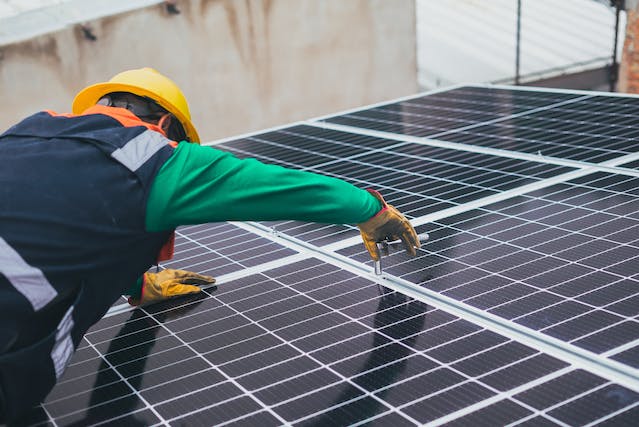
Maximising energy production
Regular cleaning, inspection, and maintenance optimise panel efficiency, ensuring maximum energy output of solar electricity for industrial applications.
Extend system lifespan
Proactive maintenance enhances the longevity of the system, safeguarding the investment made.
Safeguard investment
Routine checks and repairs prevent potential issues and enhance safety, thus securing the reliability of the solar energy system.
Mitigate potential issues
Early detection and rectification of issues ensures warranty protection, preventing downtime and ensuring uninterrupted energy production.
Finally, we end and begin this journey with these famous words, “With great power comes great responsibility”.
Key considerations as a system owner
As a system owner who believes in safeguarding the future of this planet for the sake of future generations, it is a gentle reminder to continue ensuring these two crucial factors :
Compliance
As technology progresses, adhering to local regulations and standards to ensure the system’s legality will automatically provide the next factor.
Safety
Workplace safety
Implementing safety protocols during installation and maintenance will protect your workers, who are the backbone of your corporation.
Electrical safety
Ensuring the safe handling of electrical components will mitigate hazards and unnecessary costs for your business.
Emerging trends in industrial solar power technologies
Advancements in energy storage, smart grids, and solar tracking systems mark the trajectory of future industrial solar power technologies, promising enhanced efficiency and performance.
Bifacial solar panels capture sunlight from both sides, increasing energy output, while innovative energy storage solutions like solid-state and flow batteries store excess solar energy for a consistent power supply.
Solar trackers adjust panel angles to follow the sun’s path in large installations. Floating solar panels on water bodies save land space and benefits from water cooling, enhancing panel efficiency in limited areas.
Conclusion
Industrial solar panel installation represents a pivotal step towards sustainable, eco-friendly energy solutions for large-scale industries.
Embracing this technology drives cost-efficiency and champions environmental stewardship, ultimately shaping a greener and more sustainable industrial landscape.